Introduction
The Luton Outlaws are widely recognised as one of the most talked-about football supporter firms connected to Luton Town Football Club. Emerging during the height of English football’s terrace culture in the late 20th century, the group became part of a broader subculture that shaped matchday atmospheres across the country.
While their name is often associated with football hooliganism, understanding the Luton Outlaws requires context. They formed during an era when organised supporter groups were a visible — and sometimes controversial — element of English football. Over time, the group’s reputation evolved, reflecting both the changing landscape of football governance and wider social attitudes.
This article explores the history, career-like trajectory, influence, structure, perceived net worth implications, family connections, and modern-day relevance of the Luton Outlaws — presented in a structured and professional format.
Quick Bio
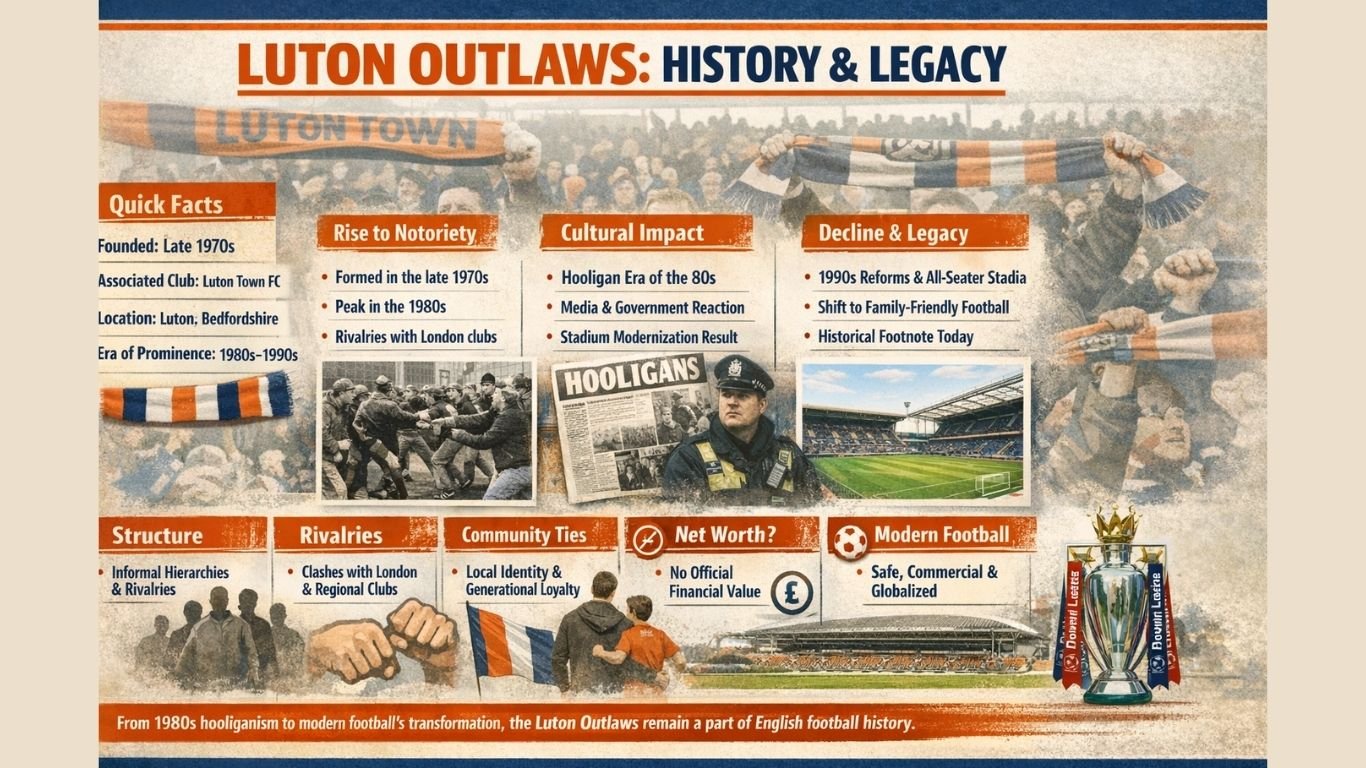
Name: Luton Outlaws
Type: Football supporter firm / organized fan group
Founded: Late 1970s (informal origins)
Associated Club: Luton Town Football Club
Location: Luton, Bedfordshire, England
Known For: Football fan culture, rivalry history, matchday presence
Primary Era of Prominence: 1980s–1990s
History and Origins
The Luton Outlaws emerged in the late 1970s and gained prominence during the 1980s, a period widely regarded as the peak of football firm culture in England. This was an era when football grounds were less regulated, security measures were limited, and supporter identity was deeply territorial.
Luton Town, based in Bedfordshire, had a fiercely loyal fan base. As rivalries intensified — particularly against clubs in London and surrounding counties — organized supporter factions developed. The Luton Outlaws were one such group, formed by individuals who sought camaraderie, identity, and dominance within the football terrace scene.
The 1980s saw the group become known within football circles, especially during high-tension fixtures. Media coverage of football crowd disturbances during this period often mentioned various firms across the country, and the Luton Outlaws became part of that broader narrative.
However, it’s important to note that football culture during this time was very different from today. Modern stadium regulations, surveillance systems, and club policies have significantly reshaped the supporter environment.
Career and Cultural Evolution
Although not a “career” in the traditional professional sense, the trajectory of the Luton Outlaws can be analyzed in phases, similar to the rise and transformation of an organization.
1. Formation and Growth (Late 1970s – Early 1980s)
During their formative years, the group established a recognizable identity. Like many football firms of the time, they developed:
- A strong internal hierarchy
- Matchday coordination
- Distinct clothing styles aligned with terrace fashion
- Rivalries with other supporter groups
This era was characterized by visibility and territorial pride.
2. Peak Influence (Mid–Late 1980s)
The group’s notoriety peaked alongside the broader hooliganism era in English football. Matches involving Luton Town occasionally attracted national attention due to tensions between opposing supporter groups.
Government intervention during this period — including stricter policing and legislative reforms — began reshaping the landscape of football culture.
3. Transition and Decline (1990s)
The introduction of all-seater stadiums, improved surveillance, banning orders, and new football regulations after the Taylor Report dramatically changed the environment. These reforms reduced organized disorder across English football.
As a result, groups like the Luton Outlaws saw a significant decline in influence and visibility. The modern Premier League era emphasized commercialization, branding, and family-friendly environments — leaving less space for traditional firm culture.
4. Modern-Day Presence
Today, the Luton Outlaws exist more as a historical identity within football culture discussions than as a dominant organized force. Online forums and fan communities sometimes reference the name, but the landscape has fundamentally changed.
Football today is more regulated, more globalized, and more commercially driven.
Structure and Organization
Historically, football firms like the Luton Outlaws operated with informal but structured hierarchies. Leadership figures often coordinated travel, communication, and group presence on matchdays.
Key characteristics included:
- Core members with long-term involvement
- Peripheral supporters who associated during key matches
- Codes of loyalty and territory
- Rival intelligence networks tracking opposing groups
These structures mirrored other organized supporter firms across England at the time.
However, unlike official clubs or corporations, such groups were not legally registered entities and had no formal governance framework.
Net Worth and Financial Influence
The Luton Outlaws, as an informal supporter firm, do not possess a measurable net worth in the conventional business sense. They are not a registered company, brand, or commercial enterprise.
However, their broader impact can be analyzed economically in three ways:
1. Indirect Club Impact
Historically, football-related disturbances across England sometimes resulted in:
- Stadium damage
- Policing costs
- Matchday revenue concerns
- Public relations challenges
Clubs across the country — not only Luton Town — experienced financial implications during the height of hooliganism culture.
2. Media and Cultural Value
Over time, football firm culture has become the subject of:
- Documentaries
- Books
- Academic research
- Media retrospectives
This has created a secondary cultural market around historical football firms, including references to the Luton Outlaws.
3. Modern Commercial Football Era
Today, football’s financial ecosystem has changed entirely. With Luton Town’s recent appearances in the Premier League era, commercial revenue streams now include broadcasting rights, sponsorships, and merchandising — unrelated to supporter firm activities.
In short, the Luton Outlaws themselves have no official net worth, but they are part of a broader historical chapter that influenced English football’s financial evolution.
Family and Community Connections
One often overlooked aspect of football firms is the social dimension. For many members, involvement was rooted in:
- Local identity
- Family tradition of supporting the club
- Community loyalty
- Generational football culture
In towns like Luton, football support frequently passes from parent to child. While firm culture represented an extreme expression of that loyalty, the underlying foundation was community belonging.
Over time, many former participants moved into ordinary professional and family life, particularly as policing reforms made such activities less viable.
Modern Luton Town support is far more family-oriented, reflecting broader changes in English football.
Rivalries and Reputation
Historically, the Luton Outlaws were associated with rivalries involving clubs in:
- London
- Hertfordshire
- Surrounding counties
Football rivalries during the 1980s were intense, and media narratives often amplified incidents involving organized supporter groups.
Reputation played a central role in firm culture. Visibility and perceived strength influenced status within the informal network of football firms nationwide.
However, modern fan culture prioritizes atmosphere, chanting, and organized supporter groups focused on positive engagement rather than confrontation.
Media Portrayal and Public Perception
The British media of the 1980s frequently covered football-related disturbances, often portraying supporter firms as emblematic of a national problem.
This coverage:
- Increased notoriety
- Shaped public perception
- Contributed to government reform
In retrospect, historians and sociologists often analyze these groups as a product of economic and social conditions of the time — including unemployment, industrial decline, and limited recreational outlets for young men.
Today, discussions about groups like the Luton Outlaws are largely historical or academic rather than contemporary security concerns.
Legacy and Cultural Impact
The legacy of the Luton Outlaws lies not in ongoing activity, but in their role within the evolution of English football culture.
Their era contributed to:
- The push for stadium modernization
- Stronger football governance
- Improved crowd management
- The transformation of football into a global commercial sport
Without the challenges of the 1980s, the sweeping reforms that followed may not have occurred as quickly or comprehensively.
In that sense, the firm is part of a larger historical narrative about how English football changed from a volatile domestic sport into a globally marketed entertainment industry.
Frequently Asked Questions (FAQs)
1. Who were the Luton Outlaws?
The Luton Outlaws were an organized football supporter firm associated with Luton Town Football Club, most prominent during the 1980s.
2. Are the Luton Outlaws still active today?
They are not widely recognized as an active organized firm in the modern football landscape. Contemporary football culture in England is far more regulated and structured.
3. Did the Luton Outlaws have an official net worth?
No. As an informal supporter group, they were not a registered company or business and had no measurable financial valuation.
4. Why were they well known?
They gained notoriety during the height of English football hooliganism in the 1980s, when organized supporter firms were a visible part of matchday culture.
5. How has football culture changed since their peak?
Modern English football features all-seater stadiums, strict security measures, banning orders, advanced surveillance systems, and a family-oriented matchday atmosphere — drastically different from the terrace culture of the 1980s.
Final Thoughts
The story of the Luton Outlaws reflects a specific era in English football history — one defined by intense loyalty, rivalry, and social change. While their activities were controversial and tied to a period of unrest within the sport, they remain part of the broader historical narrative that shaped modern football governance.
Today, English football stands as one of the most commercially successful and globally followed sports industries in the world. The transformation from terrace volatility to polished international spectacle did not happen overnight — and groups like the Luton Outlaws are woven into that evolution.